Product successfully added to your cart
Quantity:
Total:
No products
Product successfully added to your cart
 Sell
Sell 

Over the past decade, there have been constant debates and ideas from the European Parliament about a universal socket on all devices. On September 23, 2021, A legislative proposal was introduced in the European Union, which aims to force all manufacturers of portable electronics for the European market to integrate Type-C as a method of charging and data exchange in their devices. The purpose of this legislative proposal is to reduce e-waste, which is generated by tons every year. This offer only applies to devices manufactured or intended to be sold within the European Union. The advantages are many, especially if manufacturers take these measures at the global level:
All chargers and cables will be compatible with each other with all portable devices;
USB Type-C will be the new standard for all portable devices, with the socket offering fast speeds for charging and data transfer;
Users will be able to choose whether to buy the equipment with or without chargers;
Drastic reduction in e-waste generated by discarding old cables and adapters due to incompatibility with the latest devices.
Most smartphone manufacturers use the universal Type-C charging socket, but Apple still does not part with its Lightning socket. Evidently, their latest phone iPhone 14 still uses their patented Lightning port.

On June 7, 2022, the legislative change was taken into account and the European Parliament decided that the final vote would be after the summer. On October 4, 2022, the European Parliament voted definitively and they adopted the new legislative change with a majority. It forces manufacturers of portable equipment to implement the USB-C socket in all their devices that are intended for the European market. This includes phones, watches, tablets, keyboards, mice, headphones, speakers, and more. These changes must be implemented by the end of 2024. Laptops will also have to make this commitment, as due to the complexity of their assembly, their term is until the end of 2026.
These changes are forcing Apple to rethink the future of its phones and other portable devices. According to various sources, so far we have three theories about the future Apple iPhone 15:
It will be equipped with Type-C for the whole world;
All plugs and phone will be removed, charging and data transfer only wireless;
The phones will have the universal jack only for the European market. In other parts of the world, phones will come with or without a Lightning cable.
The third is the least likely because the company will divide its users. While some take advantage of using the new universal connector, others may feel aggrieved that they still use Lightning. The same applies to the reverse order, in which some are damaged because they are with the new universal socket.
So far, there is no official statement from Apple, but for them, this technology is not at all new. The company has many products that use USB Type-C technology for charging and data transfer. Back in 2015, Apple presented us with a fast charger for iPad tablets, which was Type-C. In 2017, the iPhone also received a fast charger with an adapter that also used the new universal connector. The company also offers iPad tablets and Macbook laptops that also use the universal charging socket. Therefore, they already have the technology developed, they just need to integrate it into their other portable devices, such as iPhone smartphones.

The two plugs have one similarity and that is that they are mirrored on both sides. So you don't need to insert the cable into the device at a precise position. However, in terms of data transfer speed, there is a big difference. According to the latest data, the data transfer speed for both standards is:
Lightning: 480 Mbps and compatibility with the USB 2.0 standard;
USB-C: 40,000 Mbps and compatible with the USB 4.0 standard.
seen from this data, if Apple built Type-C into iPhone smartphones, it could increase the transfer speed by approximately 8233%. If we turn this data into megabytes per second (Megabyte per second) we get that the Apple iPhone can transfer data up to 60 MB/s, and devices with Type-C can reach speeds of 5000 MB/s, which we think will be a great advantage for all users.

According to data from the European Parliament, these changes will save 250 million euros a year from buying unnecessary chargers and cables. The other important benefit is that it will reduce the disposal of unnecessary cables and chargers by around 11,000 tons per year.
We all remember the old devices that were relevant a decade ago. Each brand had its own charger. Imagine the millions of cables and phones that have been thrown away after this practice. These are hundreds of thousands of tons of e-waste that have toxic materials in them (batteries, various types of metals, and others). These toxic wastes often end up in our water resources and thus pollute the environment.
Environmental pollution is exceeding standard norms and it was only a matter of time before this legislative change was put into action. We will not be surprised if similar measures are adopted in other parts of the world.


Blog
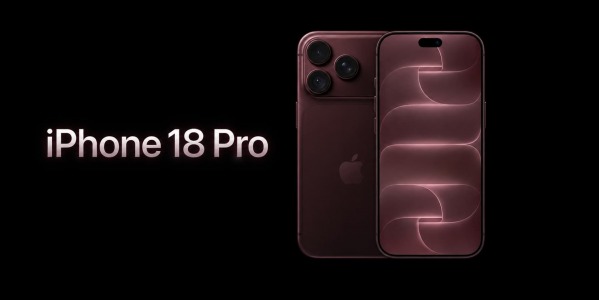
What's new in iPhone 18 Pro?
On September 9, 2026, at 8:00 PM Bulgarian time, Apple held its highly anticipated presentation, during which the company introduced the new...